Hermia expansion meets the growing demands of Imperial College Healthcare NHS Trust
Hermes Medical Solutions has worked with Imperial College Healthcare NHS Trust, one of the largest and most progressive NHS Trusts in the country, for over 25 years. During this time the solution provided by Hermes Medical has evolved alongside the Trust’s growing requirements, expanding from a single workstation at Hammersmith Hospital to a comprehensive, flexible, independent, vendor-neutral platform for all Nuclear Medicine and PET viewing, processing, reporting, analysis, research and data management, connecting all cameras and staff across multiple sites in London.
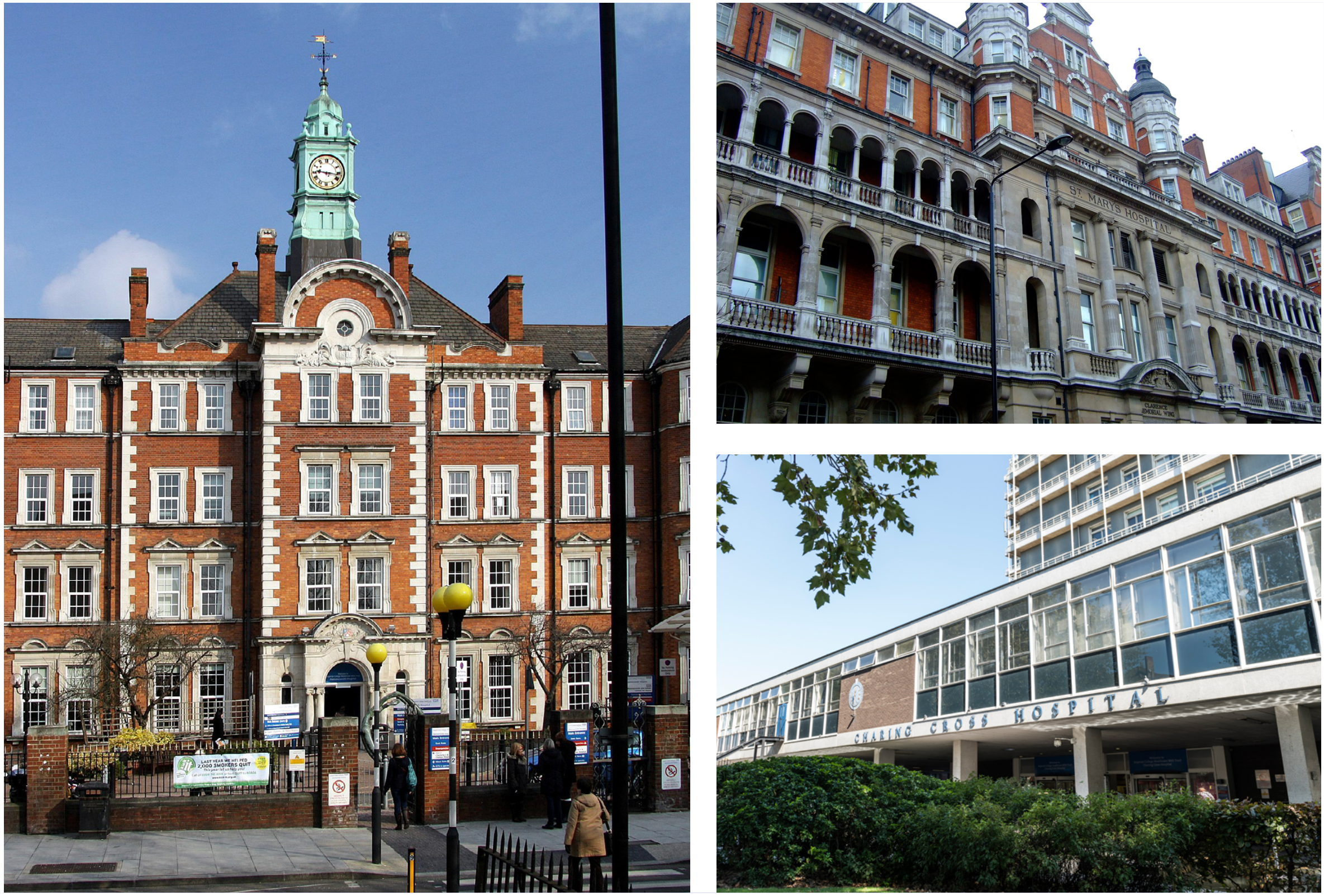 Imperial’s nuclear medicine service hospitals. On the left: Hammersmith Hospital, top right: Saint Mary’s Hospital and lower right: Charing Cross Hospital.In April 2025, Hermes Medical Solutions in the UK secured a 5-year contract to continue to be the primary provider of Nuclear Medicine and Molecular Imaging software for Imperial while expanding the number of users and data storage, and increasing system resilience and availability to meet the increasing demands of the department. The latest suite of Hermia applications including Multimodality Viewing and Dosimetry is also provided.
We spoke with Dr Zarni Win, Head of Nuclear Medicine at Imperial about the work carried out in the department and the reasons behind the decision to choose a Hermia solution.
Could you briefly introduce yourself?
I’m Head of Nuclear Medicine at Imperial College Healthcare NHS Trust. Imperial comprises three hospitals: Hammersmith Hospital, Charing Cross Hospital, and Saint Mary's Hospital in London. I’m a radiologist specializing in nuclear medicine, with particular interests in amyloid PET and dementia PET imaging. Additionally, I am involved in newer therapies such as the use of phosphorous-32 microspheres for treating pancreatic cancer (OncoSil). My daily responsibilities are divided between nuclear medicine, PET, and radiology.
Please expand on the nuclear medicine and PET investigations you carry out at Imperial.
We are a leading PET provider within the North West London PET Consortium, collaborating with several PET centres, including Royal Marsden Hospital. Annually, we scan approximately 5,000 patients, and this number is increasing by about 15% each year. One of our major challenges is increasing capacity without frequently replacing our PET scanners.
Currently, we have three SPECT/CT cameras for general nuclear medicine, which includes renal imaging for both adults and pediatrics, cancer work—mainly neuroendocrine tumours—and neurology. A significant part of our practice involves musculoskeletal imaging, such as SPECT/CT for joint pain and prosthesis complications. We also provide radionuclide therapy for benign and malignant diseases, including benign thyroid conditions like thyrotoxicosis due to Graves' disease. Notably, we were the first center to offer SIRT therapy for liver tumours and are actively involved in related research. Additionally, we undertake neuroendocrine therapies with systemic tissue-based infusions and are planning to expand our work with newer therapies.
The field of nuclear medicine and PET is rapidly evolving, driven primarily by advancements in PET and new therapeutic options with special focus on brain PET and therapies for Alzheimer.