Through the years: A conversation with Dr. Berry Allen
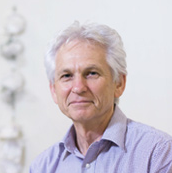
Meet Dr. Berry Allen, a freshly retired Chief Nuclear Medicine Scientist at Waikato Hospital, New Zealand, and one of our longest standing customers. Dr. Berry Allen retired on the 26 of June 2026 after impressive 54 years of service at Waikato Hospital. We have had the pleasure of interviewing him closely before his final day, reminiscing over his fruitful career, and our long partnership.
Could you briefly introduce yourself and Waikato Hospital?
My name is Berry Allen, and I am the Chief Nuclear Medicine Scientist at Waikato Hospital. Waikato is a large teaching hospital on the North Island of New Zealand and provides a wide range of specialist services. The nuclear medicine and radiology departments serve a larger area of New Zealand, over a million of people, and we perform approximately 6,000 procedures annually.
My career began in radiation therapy training at Waikato Hospital in 1973, when it was still a part of the oncology department. I later studied physics before deciding to pursue nuclear medicine. At that time, there was no formal nuclear medicine training available in New Zealand, so I completed four years of training at the London Hospital in the UK before returning home to help develop the specialty, and then various trainings ever since up to completing a PhD.
Being such a niche specialty, how did you come into the nuclear medicine field?
In the 1970s, many of the disciplines were closely linked, so I was exposed to nuclear medicine early on. What attracted me was the enormous potential of the field, even though we completely didn’t grasp it. There was also exciting work being done with radiopharmaceuticals, and the technology was rapidly evolving from static imaging to dynamic imaging.
Around that time, decisions were being made about whether nuclear medicine should sit under oncology or radiology, and ultimately it became more closely aligned with radiology. For me, it was an exciting opportunity to be involved in the development of a growing field and help shape its future.
 You’ve been one of our longest-standing customers. What initially led you to adopt our software?
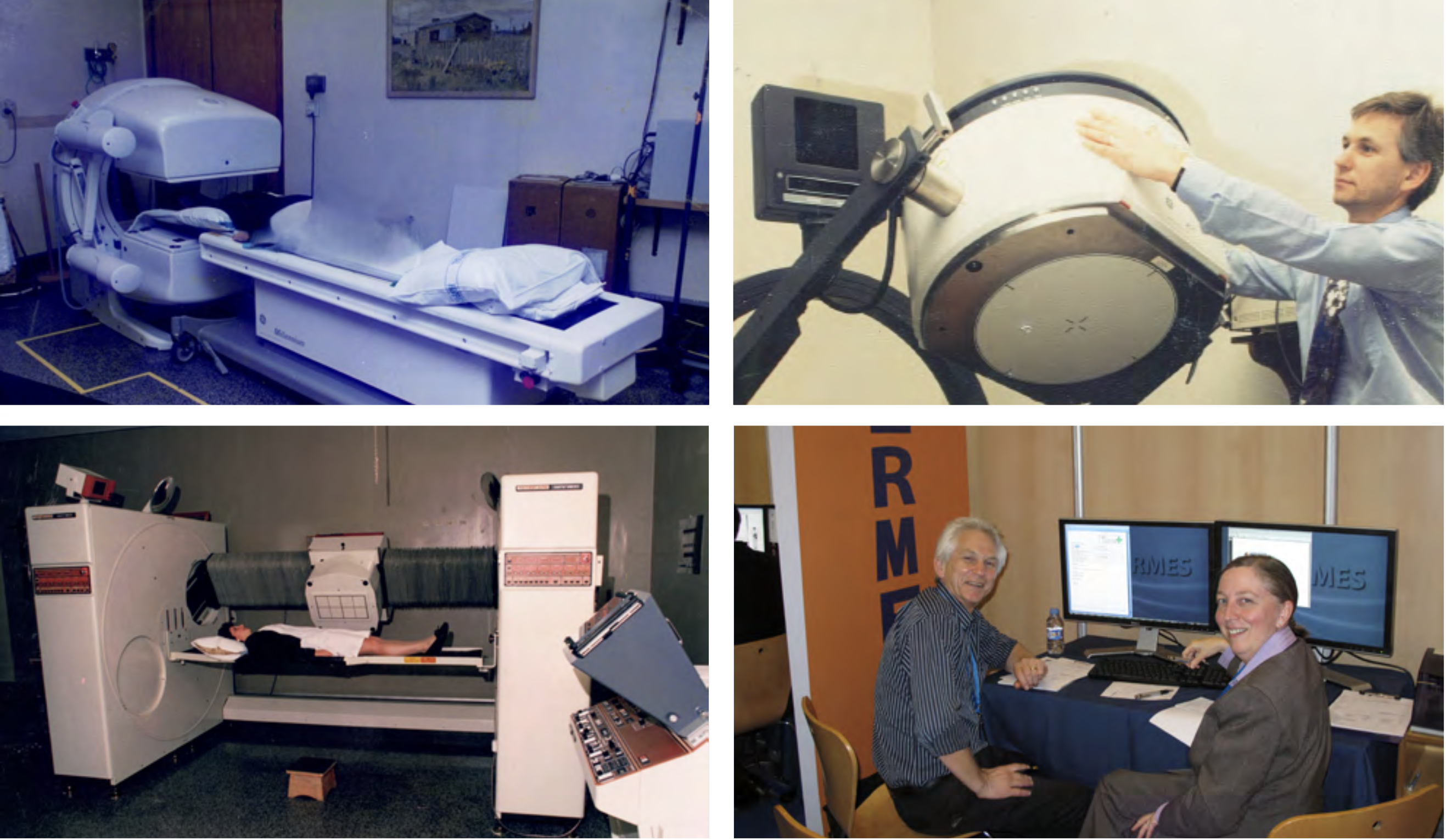
We were among the first departments in New Zealand to acquire a camera capable of performing SPECT imaging. The challenge was that the vendor had not provided the software we needed to fully utilize the technology, so I started my own research.
I happened to come across a very small advertisement for Hermes Medical Solutions (then Nuclear Diagnostics) in the Journal of Nuclear Medicine, and that's where the story began. From the start, the relationship was highly collaborative. I worked closely with Jan Bertling, the founder of Nuclear Diagnostics, and Dr. Anders Israelsson, the principal physicist and programmer, who have been instrumental, helping to write and refine some of the code to meet our clinical needs.
Our partnership wasn't just about software, it was about innovation, collaboration, and a shared vision for what nuclear medicine could become. That entrepreneurial spirit was something I valued greatly and one of the reasons we've continued working together for so many years.
This work resulted in the first SPECT scans being performed in New Zealand at Waikato Hospital in 1982 and established a long-standing partnership with Hermes Medical Solutions that continues today.
How has our software supported your department throughout the years, and what kept you staying with us?
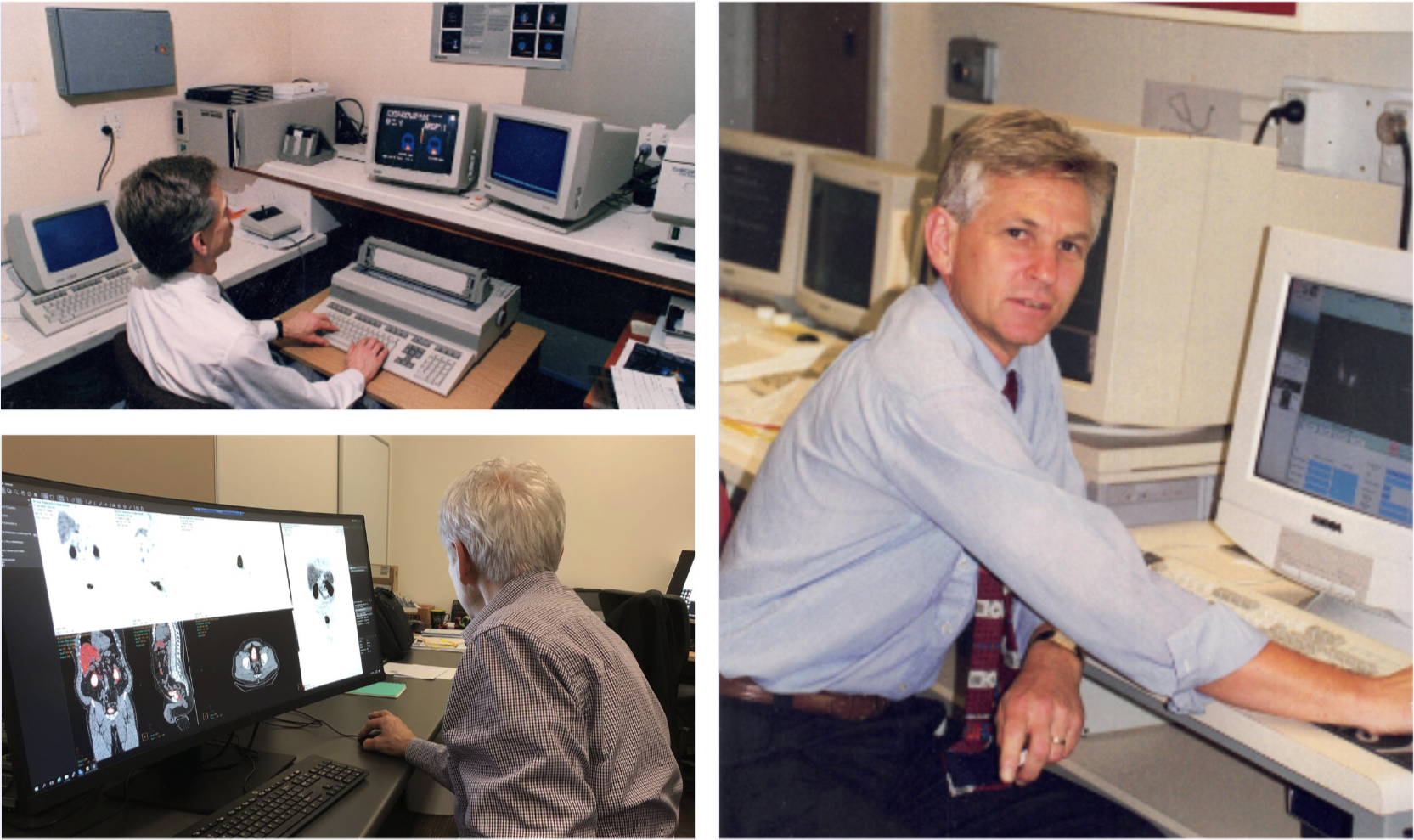
As both Hermes Medical Solutions and our department matured, your software also evolved significantly. In the early days, we were much more hands-on, often working directly with code. Simultaneously, the computing power and storage capacity improved, making Hermia increasingly sophisticated while remaining practical and easy to use.
One of the features I've particularly appreciated is the Hybrid Viewer. In a nutshell, what has kept us with you is the ease of use and the vendor-neutral approach. Being independent of scanner manufacturers gives us tremendous flexibility and allows us to integrate new technologies without being constrained by a single vendor ecosystem.
GOLD and the Application Server have also been pivotal for us. They've become the backbone of how we distribute, manage, and access studies throughout the department. Their reliability and flexibility have had a major impact on our workflow efficiency.
What do you think makes Hermes Medical Solutions special in our field?
Hermes Medical Solutions has been absolutely central to our department. In many ways, it sits at the heart of our imaging workflow.
When I compare Hermia to some other vendors, I often feel that interoperability and DICOM connectivity are treated as afterthoughts. With Hermia, these capabilities have always been fundamental. The way studies can be distributed and accessed throughout the organization is both intuitive and flexible.
Before a lot of the maturation happened, I had to do much of the work myself, often without remote support, due to time zone differences and technological limitations. It required a tremendous amount of effort to keep everything functioning. Over time, as our partnership evolved and support structures became more formalized, the level of service continued to improve. Today, I can honestly say your support is excellent. It's responsive, knowledgeable, and backed by people who understand the realities of clinical practice.
You are retiring after a fruitful career in nuclear medicine, what are some of the moments or milestones that you are the proudest of?
There have been many highlights, but the introduction of SPECT was certainly one of the biggest. Seeing that technology evolve into SPECT/CT and then quantitative SPECT with SUV measurements has been remarkable. The ability to move from qualitative interpretation to obtaining meaningful quantitative values has transformed clinical practice.
The growth of PET, particularly through clinical research and trials, has also been exciting. These advances have generated greater interest in the field and expanded the role nuclear medicine plays in patient care.
More recently, we've embraced newer cameras, and throughout all these developments HMS has played an important role. The flexibility, reliability, and ease of integrating new scanners and applications have helped us adopt new technologies much more effectively.
The biggest impact on patient care has been the increasing accuracy and confidence we can provide clinicians. Better imaging technology, more sophisticated software, and improved radiopharmaceuticals have all contributed to more informed clinical decisions and better outcomes for patients.
How do you see nuclear medicine and molecular imaging evolving in the next 10 years?
I think the future is incredibly exciting, both diagnostically and therapeutically. Theranostics is already demonstrating the unique value of nuclear medicine by combining diagnosis and treatment in a way that few other specialties can.
What makes nuclear medicine so powerful is that it provides both structural and functional information, allowing us to tailor care to individual patients. As imaging systems continue to improve, we're seeing capabilities that would have seemed impossible just a few years ago. Today, we can perform whole-body 3D scans in around 12 minutes using relatively low amounts of radiopharmaceuticals.
Artificial intelligence will also play an important role. While regulatory requirements within healthcare mean adoption will take some time, AI has the potential to improve efficiency, automation, and clinical decision-making. I believe we'll see significant advances in all these areas over the coming decade.