
Looking back on 50 years of nuclear medicine
When Hermes Medical Solutions was founded 50 years ago, nuclear medicine was a young and highly specialized field. Clinical applications were limited, imaging systems were largely analog, and much of the work depended on manual processing, local expertise, and emerging standards. Even in its early days, the discipline carried a clear and compelling promise: that functional imaging could reveal disease processes invisible to conventional anatomical imaging.
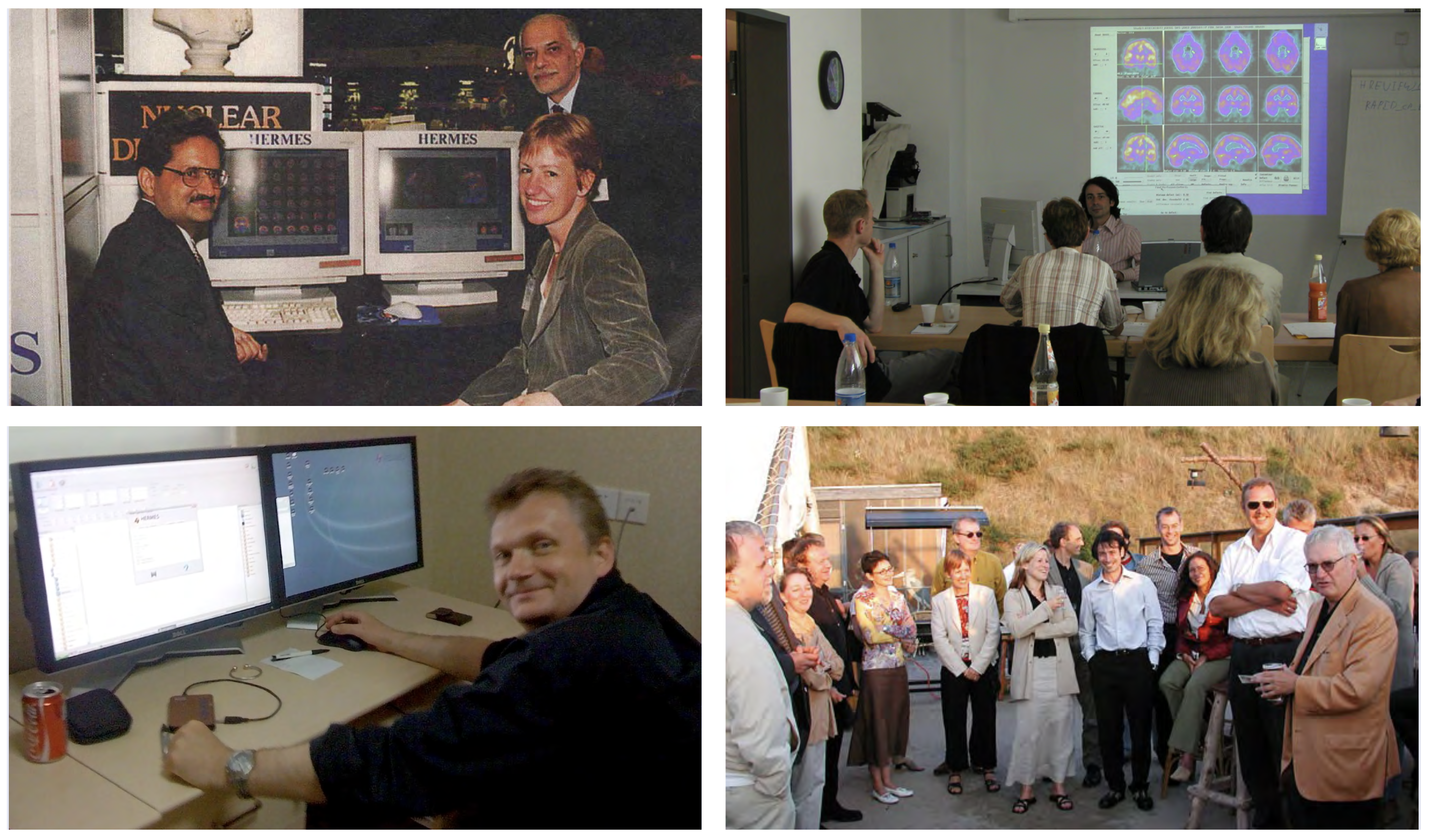
Over the past five decades, nuclear medicine has been defined by a singular ambition – to see disease more clearly and to treat it more precisely. What began as a niche discipline focused on tracer kinetics and planar imaging has evolved into a cornerstone of modern, personalized healthcare. As Hermes Medical Solutions marks its 50th anniversary, it offers a moment not only to celebrate longevity, but to reflect on how the field itself has grown, matured, and redefined what is possible, and on how long-standing collaboration between clinicians, researchers, and industry has shaped that journey.
From early imaging to clinical impact
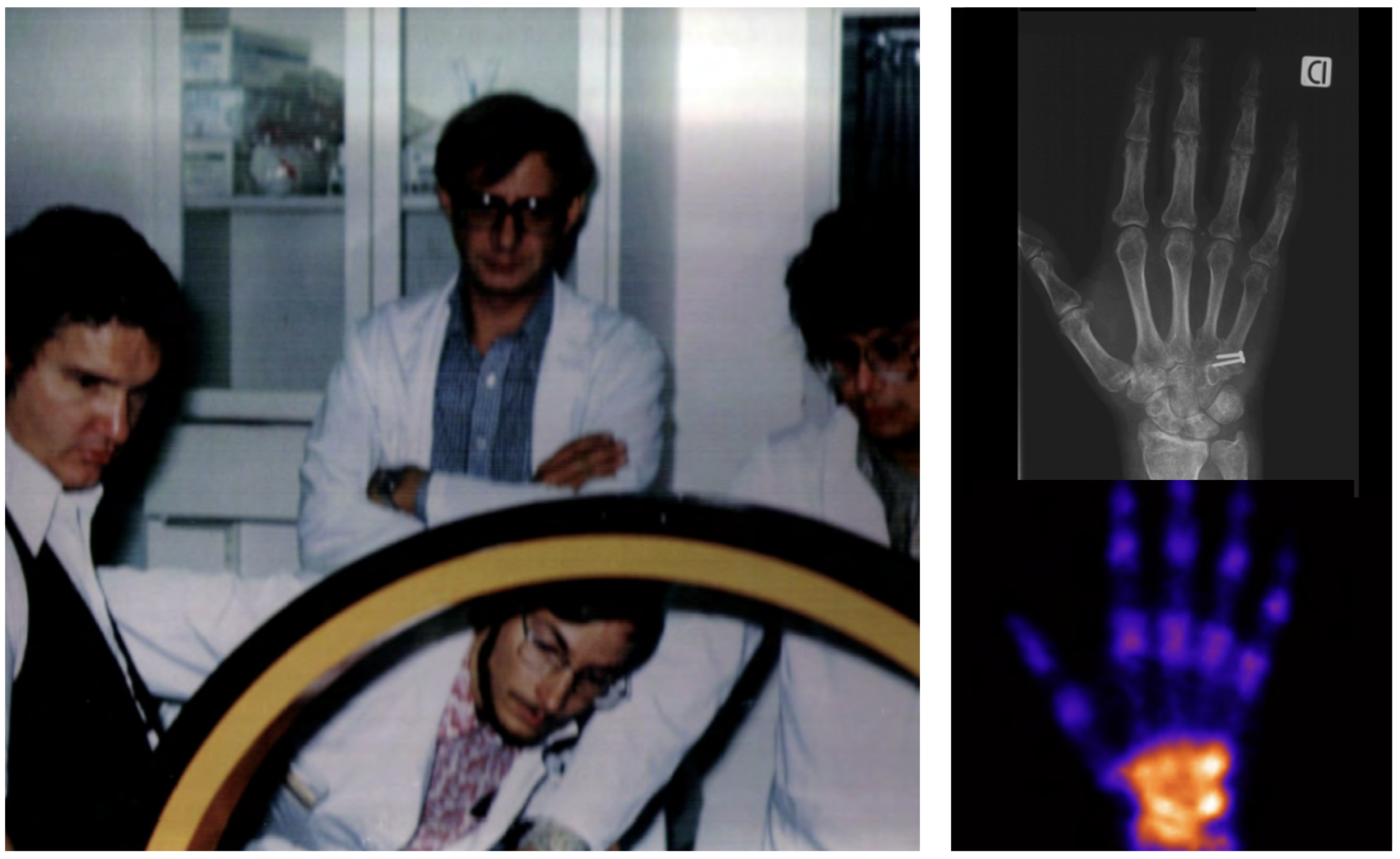
Fifty years ago, nuclear medicine was still finding its clinical footing. Gamma cameras were advancing, workflows were largely manual, and reliable quantitative analysis was the exception rather than the rule. Over time, improvements in detector technology, reconstruction algorithms, and finally hybrid imaging laid the groundwork for broader clinical adoption.
Software quietly became the enabler of this progress. From early tools that supported image processing and analysis to today’s advanced, workflow-driven platforms, software has helped nuclear medicine scale beyond individual experts and into repeatable clinical practice. Companies working closely with the clinical community emerged during this formative period, focused on transforming complex data into clinically meaningful information – an emphasis that has remained central as imaging and therapy have grown more sophisticated. As data volumes increased and studies grew more complex, clinicians needed tools that could translate images into insight – reliably, reproducibly, and efficiently.
 Standardization, quantification, and trust
As nuclear medicine expanded, so did the need for consistency. Multi-center trials, longitudinal follow-up, and evidence-based practice all depend on standardization and quantification. Over the decades, the field has moved steadily toward measurable, comparable results, whether in oncology, neurology, cardiology, or beyond.
Over time, software providers have grown alongside this evolution, focusing on tools that support clinical confidence rather than novelty for its own sake. Over decades, Hermes Medical Solutions has contributed to the adoption of standardized, quantitative workflows by delivering tools designed to be vendor-neutral, reproducible, and aligned with real-world clinical needs, helping institutions compare results across scanners, sites, and time points. By prioritizing vendor-neutrality, validated workflows, and close collaboration with clinical users, Hermes Medical Solutions has mirrored a broader industry trend: trust is built through robustness, transparency, and long-term reliability.
The rise of theranostics and personalized care
Perhaps no development better captures the maturity of nuclear medicine than the rise of theranostics. The ability to combine diagnosis, therapy planning, and response assessment within a single molecular framework has shifted expectations across oncology and rare disease care. What was once considered advanced research is increasingly moving into routine clinical practice.
This transition places new demands on software, particularly in dosimetry, quantification, and longitudinal analysis. Industry innovation has contributed to this shift through solutions that support the entire framework, enabling clinicians to move from diagnosis to treatment with greater confidence and continuity. The future of nuclear medicine is not just about acquiring images, but about integrating data across time, modalities, and treatment pathways to support truly personalized decisions.

A field built on collaboration
Looking back, it is clear that nuclear medicine has always been a collaborative discipline. Physicists, physicians, technologists, engineers, and industry partners have shaped its progress together. Lasting impact has come not from isolated breakthroughs, but from sustained partnerships and incremental improvement.
Our 50-year journey within this field reflects this reality. Long-term relevance in healthcare software is not driven by rapid cycles of reinvention, but by sustained collaboration with clinicians, researchers, and industry partners. By evolving alongside clinical practice, Hermes Medical Solutions has helped translate innovation into tools that can be trusted in daily care. Enduring relevance in healthcare software is achieved by listening to users, adapting to clinical change, and maintaining a long-term perspective, qualities that are increasingly vital as healthcare systems face growing complexity and demand.
Looking ahead
While this anniversary invites reflection, it is ultimately forward-looking. Nuclear medicine is entering a new chapter, one defined by data-driven care, personalized therapy, and deeper clinical integration. The foundations built over the past five decades provide confidence that the field is ready for what comes next.
Fifty years on, the mission remains strikingly familiar for Hermes Medical Solutions: to deliver clarity, confidence, and clinical value through molecular imaging. The tools have evolved, the applications have expanded, and the impact has grown, but the core purpose of nuclear medicine, and those who support it, endures.